




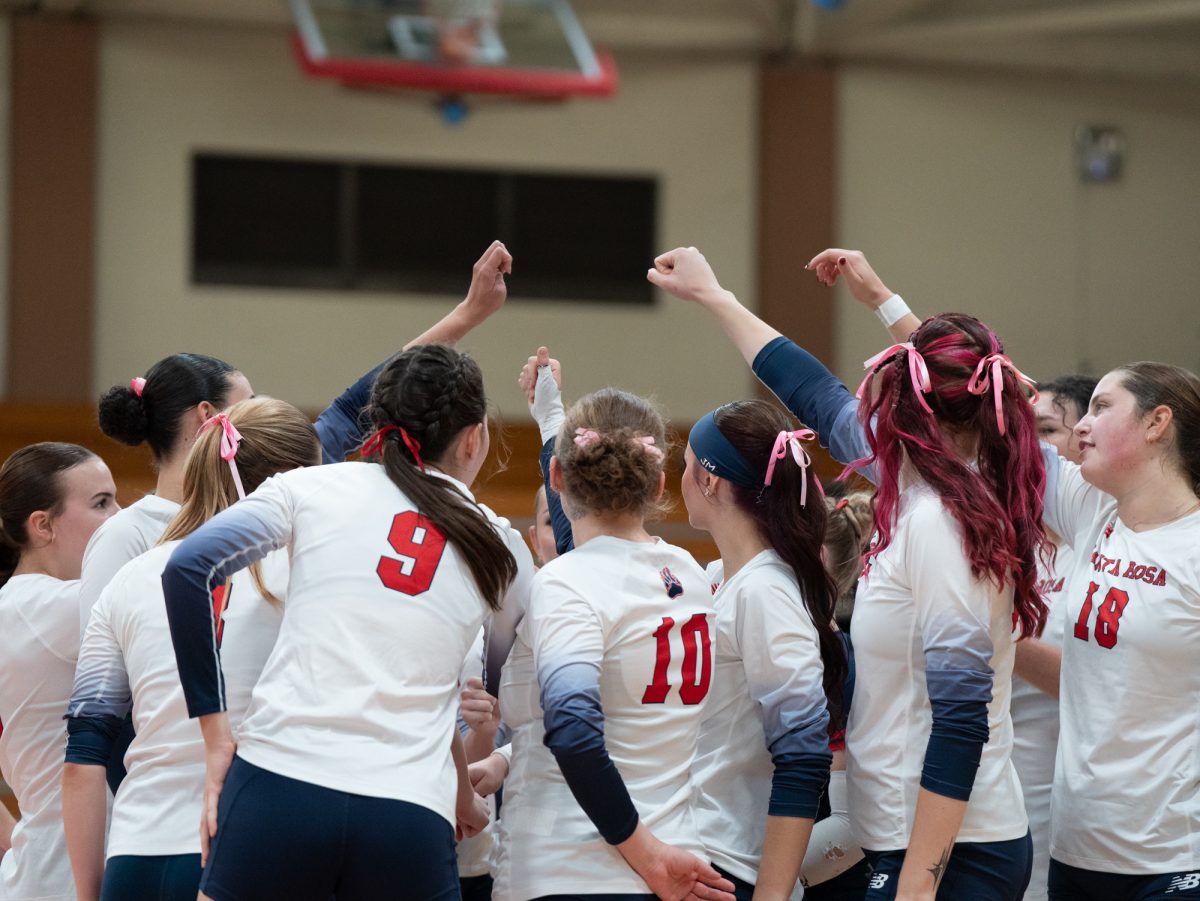
An ongoing debate in the Santa Rosa Junior College athletics department questions whether transgender women should be allowed to participate in all-female sports. This follows three SRJC female volleyball players filing a complaint with the U.S. Department of Education claiming Title IX violations by SRJC and the California Community College Athletic Association (3C2A) after a transgender female was allowed to join the volleyball team.
The three young women claimed a fear of safety and a lack of equal athletic opportunity for all junior college women athletes. The Department of Education released a press release on Jan. 14, announcing an investigation into 18 institutions — including SRJC — across 10 states, where players filed complaints alleging their Title IX rights, which prohibit sex-based discrimination in an institution that receives federal funding, had been violated.
Anyone should be allowed to participate in sports regardless of their gender identity or their genitalia. Transgender people didn’t appear out of thin air, and they’re not going to go away because someone feels threatened or scared by them. People fear what they don’t understand, and there are plenty of people like President Donald Trump who don’t understand that some people feel a different gender than the sex they were assigned at birth.
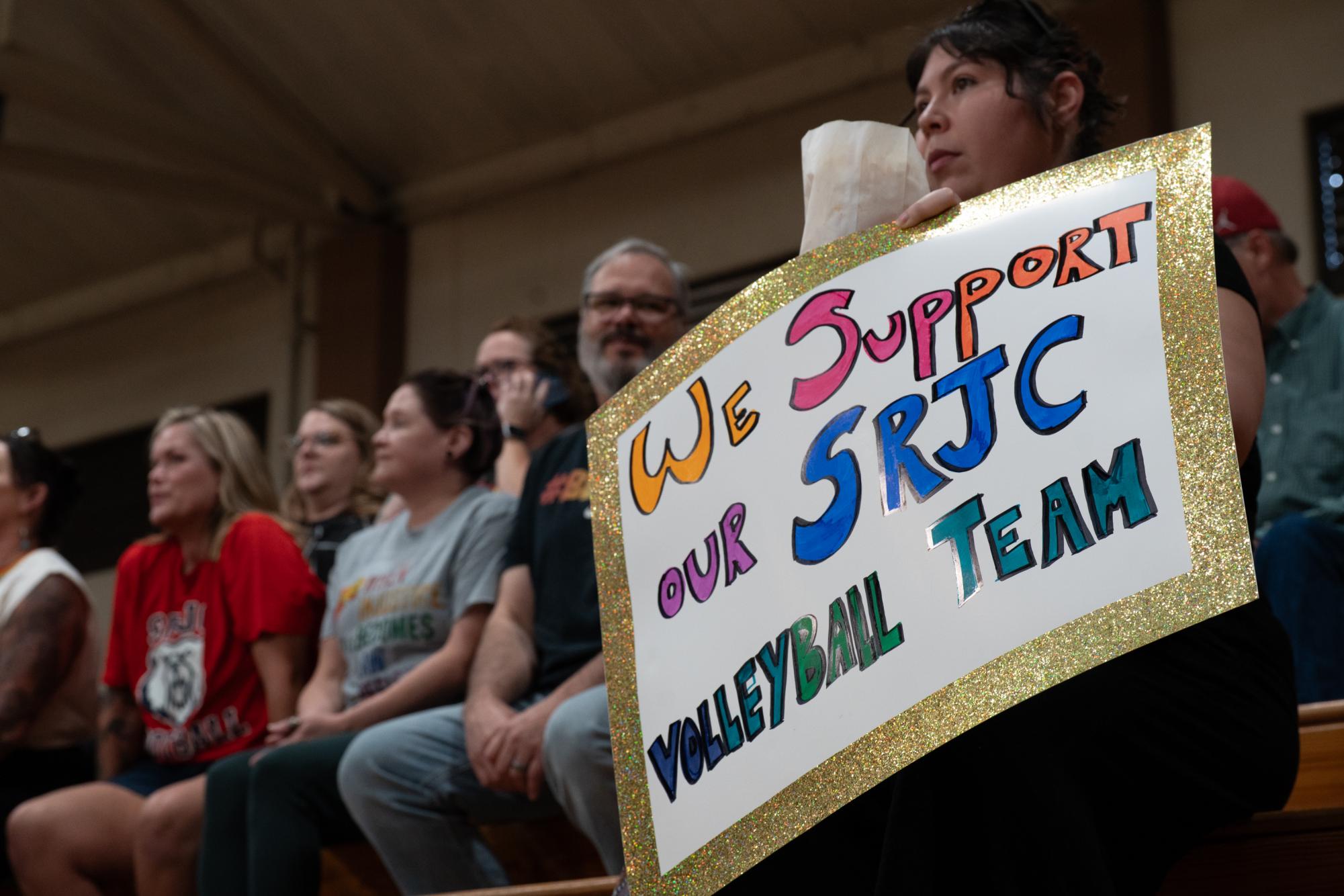
Since the beginning of the year, state legislators have passed 50 anti-trans bills around the country; 44 have been signed into law and 770 are still under consideration. On Feb. 5, 2025, President Trump signed Executive Order 14201, “Keeping Men out of Women’s Sports,” which forbids a person assigned male at birth from competing on women’s teams in institutions that receive federal funding.
After a female fencer declined to compete against a transgender opponent, the Olympics and Paralympics committee adhered to President Donald Trump’s executive order and barred transgender women from competing in women’s Olympic sports. Furthermore, all players who aren’t eligible for the women’s category, including nonbinary athletes, transgender men and intersex athletes, will also be limited to competing in the men’s category.
While this issue recently reached SRJC, transgender people in sports have always been a controversial topic. In May 2025, a trans girl at a California high school won first and second in two track and field competitions. The knowledge of her win reached Trump, who threatened to pull federal funding from the state if she was allowed to participate in future competitions.
Transgender swimmer Lia Thomas was banned from competing in the 2024 Olympics because she’s transgender. When trans player Brooklyn Ross was allowed to compete against women in the Wyoming Governor’s Cup for Tennis, the situation angered Jackie Fulkrod, president of the Wyoming Tennis Association, who resigned from her position.
Transgender people lived in my conservative Marin town, but they kept their identities quiet after white football players chased a nonbinary classmate of mine home. The transgender students realized the only way to protect themselves was to hide their true gender identities.
The Trump Administration has enacted executive orders and policies targeting minorities, and transgender people and members of the LGBTQ community aren’t the exception.
“I don’t think trans people are safe in America regardless, but with the Trump administration, it’s definitely worse,” said SRJC student Zoë Steiner. “His rhetoric makes people think they can do or say whatever homophobic transphobic bullshit they want.”
Transgender people shouldn’t be restricted from activities and opportunities others enjoy; it’s another form of discrimination, and minorities in America already face enough of that. Just like a person can’t choose their sexual orientation, they can’t choose how they feel about their gender.
Some people argue that a person assigned male at birth who plays sports has physical advantages over women in sports, despite hormone therapy, surgery and other aspects of transition, since biologically men are stronger than women. This is supported by data indicating that in almost all sports, the physical difference plays a vital role. A 2021 study from Women in Sport in England showed that adult men have 40-50% greater upper limb strength compared to women, and that men have a larger and denser skeleton, longer arms and legs and bigger hands and feet.
2021 was five years ago. Now there is more scientific reasoning and research as to why trans people don’t pose a threat to cisgender sports, especially at high school and college levels. And while men are biologically stronger than women, the hormone medicine trans women take lowers testosterone levels and reduces muscle mass, giving them similar bodies to cisgender women.
According to data from The University of Melbourne, a study shows that trans-women who took gender-affirming hormone therapy (GAHT) for two years showed little to no advantage over cis-women in endurance tests, and after four years performance differences disappeared.
Furthermore, 3C2A’s “Transgender Participation Policy” allows transgender women to play on women’s teams after a year of testosterone suppression treatment to reduce physical advantages. According to Form Z, 3C2A’s transgender and nonbinary participation form, transgender men aren’t allowed to play on women’s teams after starting treatment with testosterone, since it’s seen as a performance-enhancing hormone.
People who think transgender players, especially women, shouldn’t play sports think so because of the biological differences that strengthen them, despite the fact that GAHT aligns a person’s physical appearance with the gender they truly identify as. According to the International Olympic Committee, transgender female athletes showed greater handgrip strength — an indicator of overall strength — but lower jumping ability, lung function and relative cardiovascular fitness compared with a person assigned female at birth.
People who oppose transgender players in sports are protesting the unknown, and although trans-women’s path to femininity is different from that of cis-gender women, and they will never experience a period, or be raised in the stereotypical society and have to fit gender norms ingrained in them as a child, they are still women. They are still women who fight every day to be seen as women and to be comfortable in their skin. We can’t discount their experience as women just because it’s different from ours.
Why are we worrying about the “fairness” and “safety” for the other players, when there are so many issues that women face in sports regardless, such as negative media scrutiny and underpayment compared to men’s teams? According to The New York Times, Loughborough University researcher Joanna Harper, who studies the effects of hormone therapy on transgender athletes, told The New York Times that, “Out of 200,000 women in college sports at a given time, about 50 are transgender.” From this number, trans-women playing in all-female sports is roughly 0.00025%, a minuscule percentage compared to the 99.975% of women who aren’t transgender. When people bring up their issue with trans women playing sports, especially at a college level, they tend to exaggerate this number to make it more alarming.
The discussion over trans women in sports is ever-continuing, and it’s hitting much closer to home with SRJC’s volleyball team and the Title IX investigation. While the future for trans women in sports is unknown, trans players have not and will not pose a threat to other players, and thinking so only continues the discrimination and stigma they face.
“Every marginalized community faces the problem where people who aren’t in the community don’t spend as much time or effort learning about the issues that communities they aren’t in face,” Steiner said. “It’s not easy to dedicate so much time learning about something that doesn’t affect you, but it makes it so those marginalized people, be it trans or otherwise, are forced to defend themselves against people who really don’t care to listen to what they have to say.”


Don • May 27, 2026 at 7:37 pm
Well researched and written. The author will go far as a professional journalist.