



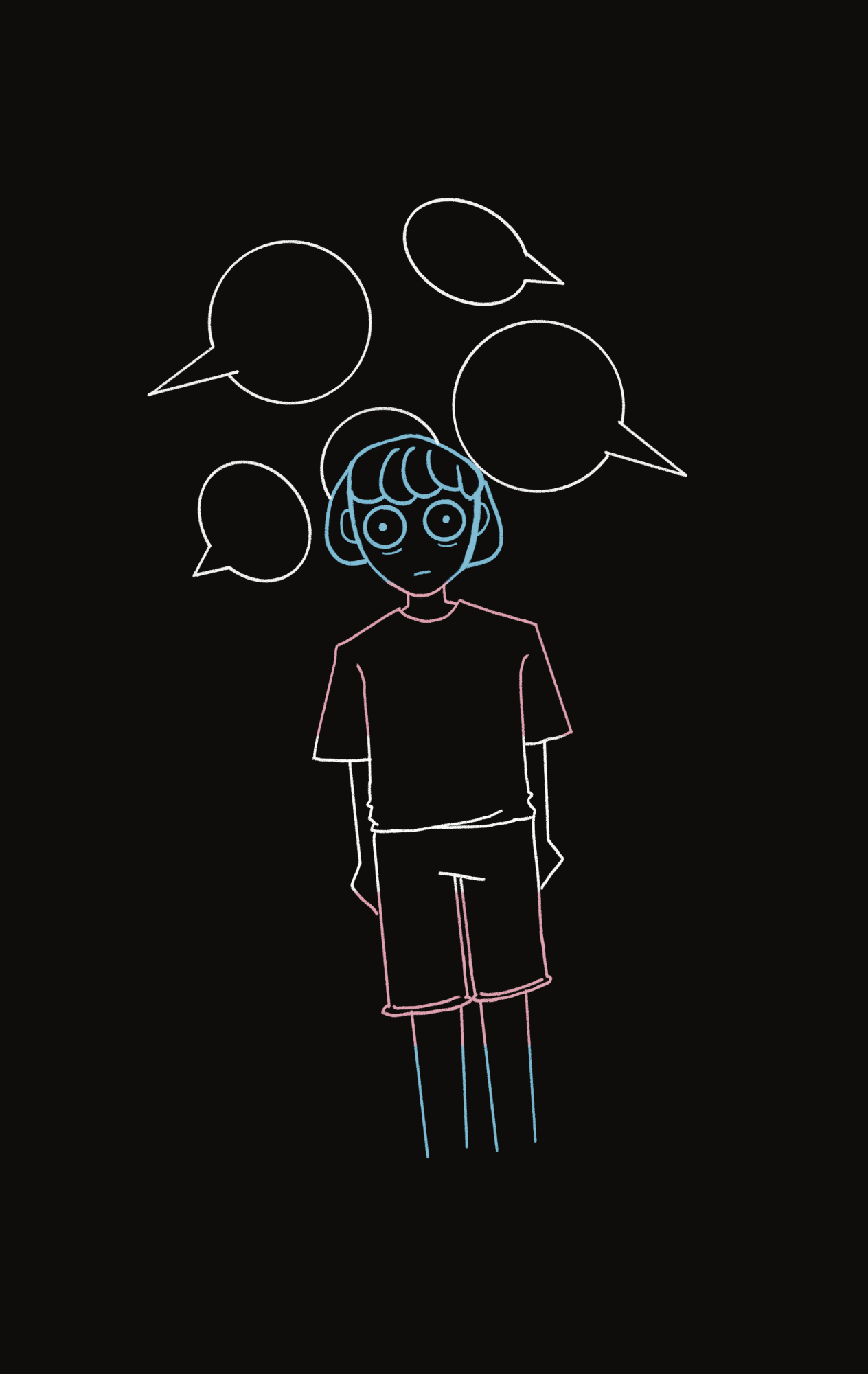
Although the many actions taken by the Trump administration to limit gender expression have fluctuated in and out of national attention, the emotional and mental stress remains at the forefront for trans students at Santa Rosa Junior College.
In February, Kansas revoked driver’s licenses for 1,700 trans individuals because their gender listed didn’t align with their gender
at birth. The Supreme Court overturned a law that would ban conversion therapy for minors in Colorado, Trump pressured multiple health insurance companies to ban trans-related surgeries for anyone under 19 and Trump’s Department of Education issuing SRJC over Title IX accusations against a trans athlete.
A study by the Trevor Project, a non-profit suicide prevention and support organization for LGBTQ youth, found that from September 2023 to March 2025, anxiety among LGBTQ youth increased from 57% to 68%, along with depressive symptoms rising from 48% to 54% and suicidal ideation growing from 41% to 47%. Trans and nonbinary youth ages 13-17 reported the lowest rates of mental health and represent the highest risk for suicide.
Jack, 18, a trans SRJC student who didn’t want their last name used for personal safety and fears of being out to the public, said they
have friends living in rural states with more restrictions, such as the Kansas removal of driver’s licenses. Those friends know people
who have died by suicide due to a lack of resources to support them and the Trump administration’s anti-trans agenda. Jack said he has been personally affected and has felt his community struggle. He has not felt safe in seeking mental health resources for trans individuals from SRJC, primarily because of transphobia he’s seen on campus.
Zander, an SRJC biology major who wished for their last name to be omitted because he has a conservative family, hasn’t been able to
medically transition, and has been concerned for people who are more visibly trans and those living outside of California. Although physically safe, Zander still feels his mental health worsening as a result of political pressures, such as the current administration actively targeting of SRJC for accused Title IX violations.
He has also felt distressed about the lack of resources and people to support his identity. “Coming from an unaccepting family, [I have] the stress of possibly not having people to fight [for me],” Zander said.
He has not accessed SRJC’s resources for trans mental health, such as the Queer Resource Center, because he said his sense of safety diminished after the Title IX case against a trans athlete began.
Marina Lee, 20, an SRJC music major, worries what the future will look like for trans individuals if the political climate doesn’t
change. She acknowledges her situation is different from others in more conservativestates, though she said she has been neg-
atively affected by community reactions surrounding the Title IX accusations.
She said she has also seen government officials from both left-wing and right-wing parties who are dismissive or hold anger. She has begun to hold less faith in the government and society at large, with how much aggression has been shown towards her identity, from people boycotting Bud Light after a sponsorship with a trans woman, to executive orders and legislation defining sex and gender in a binary way.
Lee has found a safe haven at the Intercultural Center, noting how supportive QRC coordinator Jennifer Espinoza has been throughout her transition. SRJC psychology major and Oak Leaf editor Zoë Steiner, 23, thinks the current political situation is just another display of historical discrimination on which the country was founded, rather than a new issue.
“I’m still one of those people who’s like, it doesn’t really matter who’s president, because we still exist in a system that is basically just — not excused fascism — but it’s written into the Constitution,” Steiner said. “When a country is literally built on genocide, you
can’t expect much better.” Despite believing this is the norm, they have seen discrimination become more overt under the Trump administration.
“It’s more obvious now, whether that be because [discrimination] is happening more often, or just hating Trump is a very publicized thing,” Steiner said. “I think more people are paying attention to it now, which makes it seem big and can make people be like, ‘Oh, it
wasn’t under the Biden administration.’” Steiner believes the subtle transphobia of the Biden administration has been overshadowed by the outward display from the Trump administration.
Though they believe this is an old issue, it has still affected their mental health, but they do consider themselves lucky to have a community and family that supports them.
In general, they feel safe and accepted at SRJC, but Steiner noticed a social shift after the Title IX accusations and was terrified
when anti-trans protesters descended on campus in October 2025 and protested outside a volleyball match at Haehl Pavilion.
Steiner has not had the time to seek mental health services from SRJC but has talked to the current QRC coordinator, Bree Clark,
and feels she has been very kind and would be safe to talk to. Although trans SRJC students may feel safer in California, they still feel the effects of the Trump administration’s policy changes and experience more mental distress as a result. Clark chose to step into her current role as QRC coordinator after witnessing LGBTQ individuals being disproportionately affected by things like housing insecurity, lack of access to affirming healthcare and barriers to essential resources, especially with intersecting marginalized identities in her previous role as basic needs specialist.
“These experiences reinforced for me that this work must be intersectional and rooted in equity,” Clark said. Clark cited multiple studies showing that political rhetoric and policies that target trans individuals have deeply impacted the trans community. She’s also seen rates of suicide and attempts increase in transgender people during Trump’s last term and in the last year, proving the mental distress the community experiences when faced with political targeting and repression.
Despite only assuming her role in March, Clark has been working hard to create an affirming and safe space for trans individuals at the QRC. She has worked with students and staff on hosting multiple trans-focused events, including the Trans Day of Visibility. Clark is also working on expanding current support systems and building new systems to offer mental health referrals, basic needs resources, identity-based programming and community building through drop-in hours. “My goal is not only to respond to harm, but to actively build conditions where students can thrive,” Clark said.
RESOURCES:
SRJC Queer Resource Center – 707-527-4964
Drop in hours with Bree Clark:
Mondays 4 to 6 p.m.
Thursdays noon to 2 p.m.
Positive Images – (707) 568-5830
Drop in hours
Tuesday to Friday, noon to 6 p.m.
Trans Lifeline: (877) 565-8860
Hours of operation
Monday to Friday, 10 a.m. to 6 p.m.
