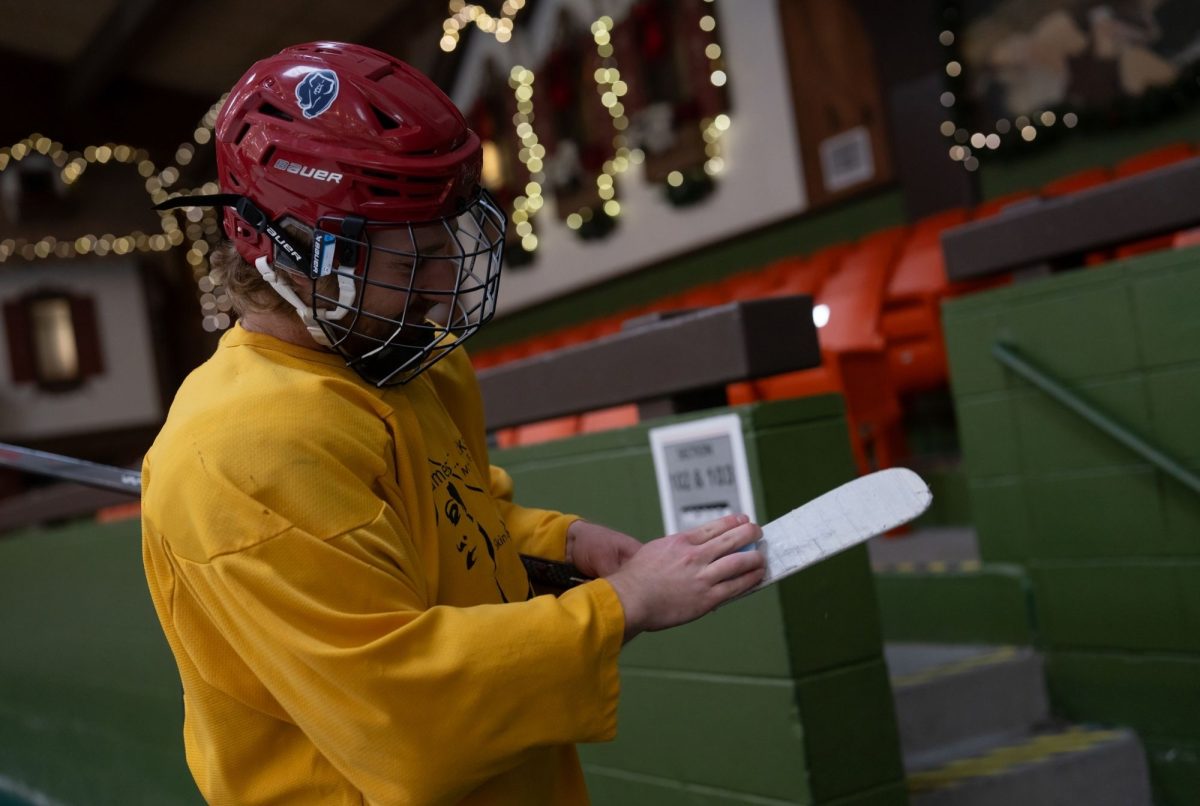
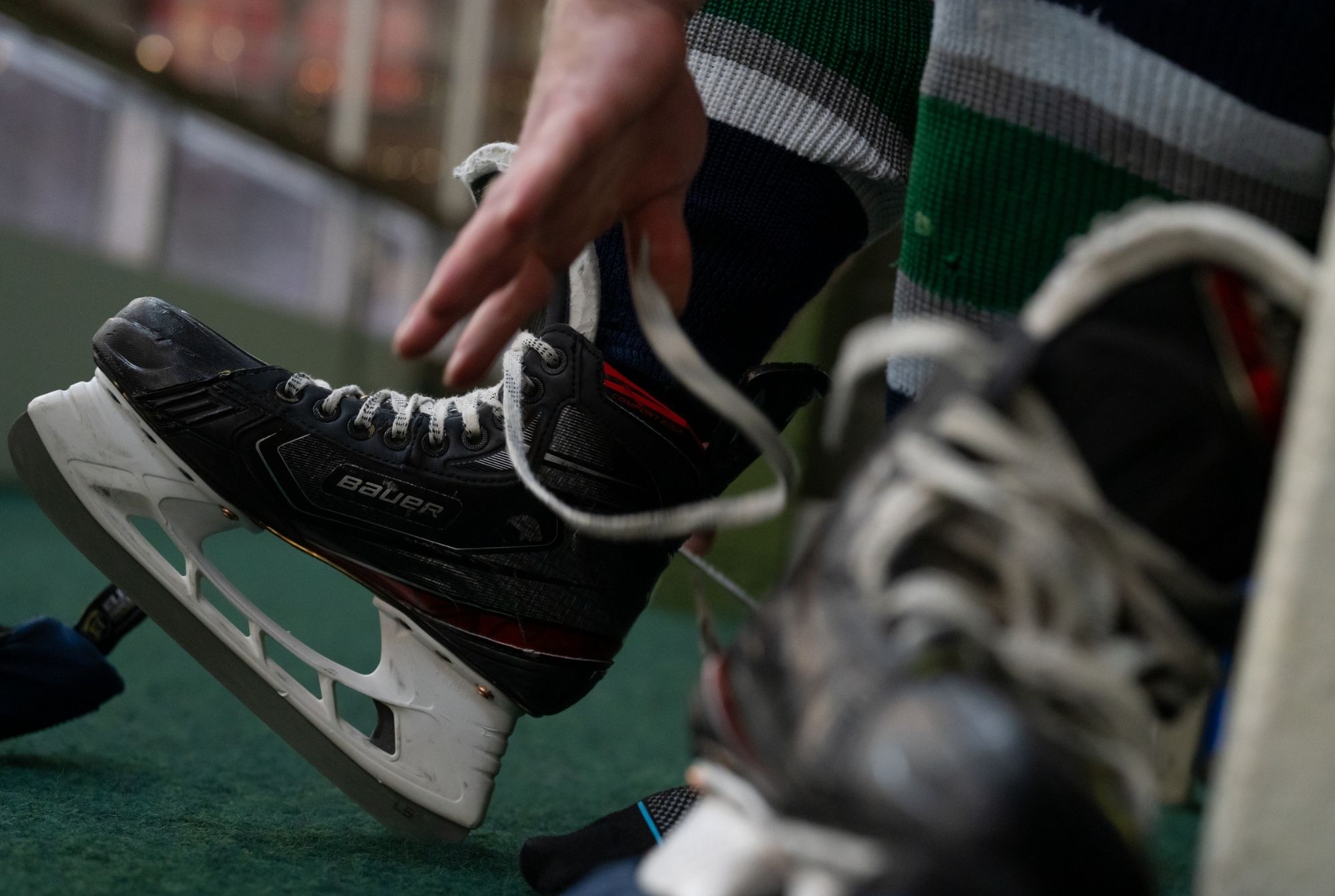
At Snoopy’s Home Ice, the Santa Rosa Junior College Polar Bears locker room is a scene of organized intensity long before the first puck drops. Sticks whack against the concrete, gloves slap against benches and a faint pulse of music threads through the noise.
Every player moves with a rhythm only he understands, from the order in which he straps on pads to the precise way he tapes his stick.
In hockey, routines aren’t just habits — they’re a lifeline. They calm the nerves, focus the mind and give players a sense of control over a game that moves faster than most can track. Some rituals verge on superstition, while others are purely practical.
For players Logan Koop, Traber Burns and Adam Berry, game day is a careful balancing act between psychology, preparation and habit.
Koop: Carefully structured chaos
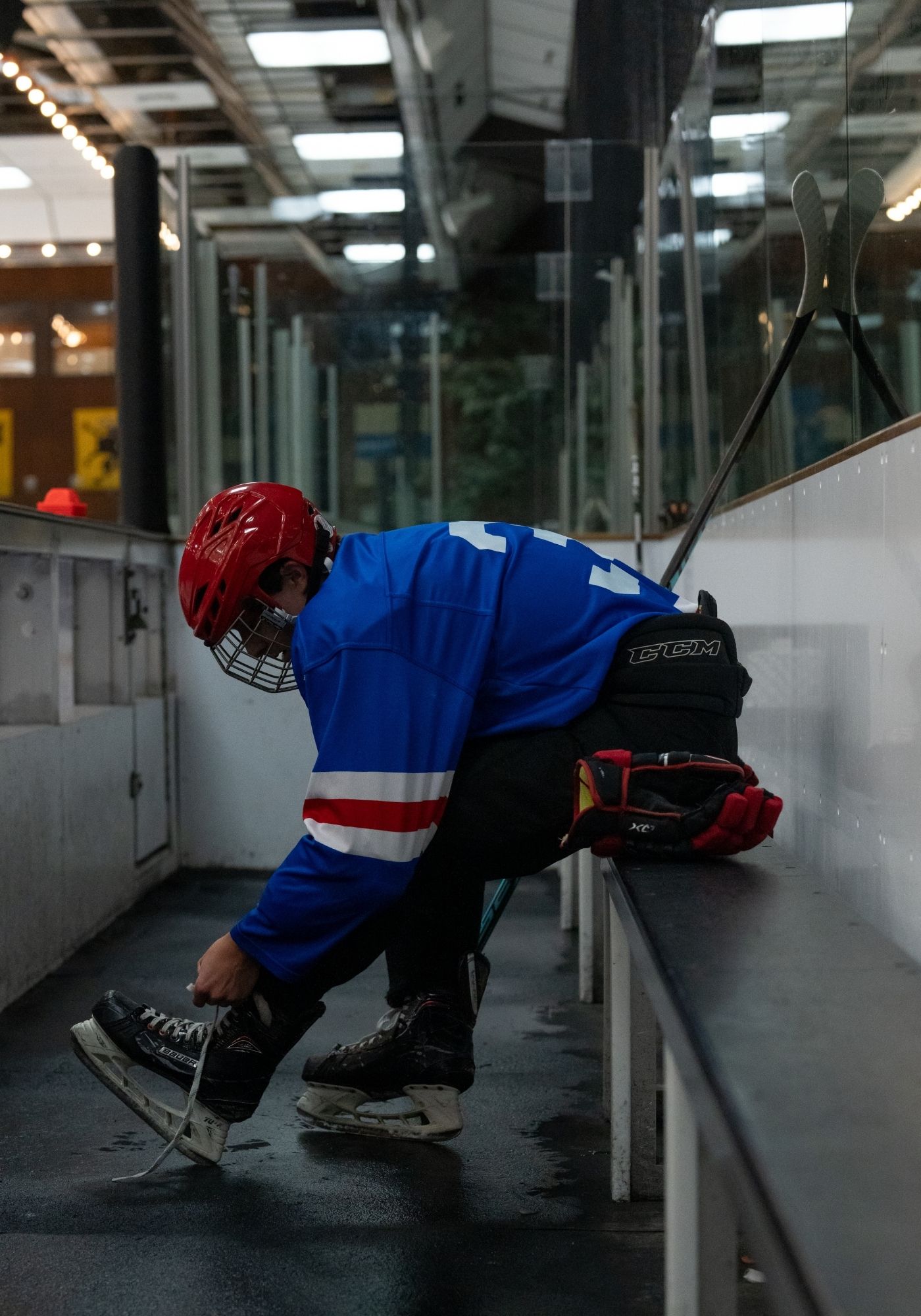

Forward Logan Koop, No. 44, uses his pregame routine to mentally prepare and maintain control. On a game day, he keeps things poised but intentional.
“If I’m not working, I just stay pretty relaxed,” Koop said. “Throughout the day, I don’t do anything too crazy — I might go to the golf course, hit half a bucket of balls or just go for a walk.”
Koop’s meals are deliberately simple. He eats early in the day, usually around 1 or 2 p.m., and avoids heavy foods that could slow him down or make him nauseous. “You can run on something like a good bowl of pasta,” he said. “But if I eat too close to the game, I’ll feel sick.”
Unlike some of his teammates, Koop isn’t swayed by showers or other pregame rituals. “Owen [Hamblin] likes to take pregame showers. I’ve tried, but I don’t get it. You’re just gonna get all gross out there anyway,” he said.
Koop follows a specific order to put on his gear — jock, kneepads, pads, socks, pants, skates, tape the socks, shoulder pads, jersey, helmet, then gloves. This repetition keeps him grounded and ensures nothing is overlooked.
Koop also leans on music as part of his mental preparation. He rotates three songs every game — “Walk” by Pantera, “Rooster” by Alice in Chains and “One” by Metallica — then lets the playlist shuffle for the rest of the session.
“I don’t necessarily have a set playlist. Outside of those three songs, it’s whatever I’m feeling at the moment,” he said. “The songs get me in the right spot.”
Koop’s stick receives the same ritualistic attention. He wraps it fully, heel-to-toe, a habit born of wanting to protect an expensive stick. Over time, it became a personal ritual.
“It may not actually help, but I’ve stuck with it,” he said. After a bad game, he might retape his stick entirely — after a win or a goal, he usually leaves it as is.
Burns: the anti-superstitious minimalist
Center Traber Burns, No. 2, takes the opposite approach to Koop finds stability in structured habits, Burns prefers simplicity and avoids superstitions.
“I try to not have much work to do,” Burns said. “I get all my homework done before the weekend so I don’t have to worry about it on game day. Then I just do light activities and try to relax.”
Burns focuses on hydration and nutrition. He drinks at least a gallon of water during the day and eats meals high in carbs and protein but low in fat. His pregame meal is usually spaghetti with ham, onions and peppers — functional, but not indulgent. A granola bar and banana a few hours later help prevent cramps during the game. Burns acknowledges hockey culture is rich in superstitions, but he sees them as potential distractions.
“Superstitions are more distracting than helpful,” he said. “I keep my day as low-key and simple as possible.”
He recognizes and respects that his teammates have their own rituals, and he gives them space in the locker room to prepare however they need. Burns himself only has one “habit” he maintains: taping his stick. It’s not superstitious; it’s comfort and a skill he learned growing up. The consistency helps him feel ready without adding mental clutter.
Even away games don’t change his routine much. Though he may not have perfect nutrition on the road, he adapts. “You just do the best you can and focus on what you can control,” he said.
Berry: Blending ritual with psychology
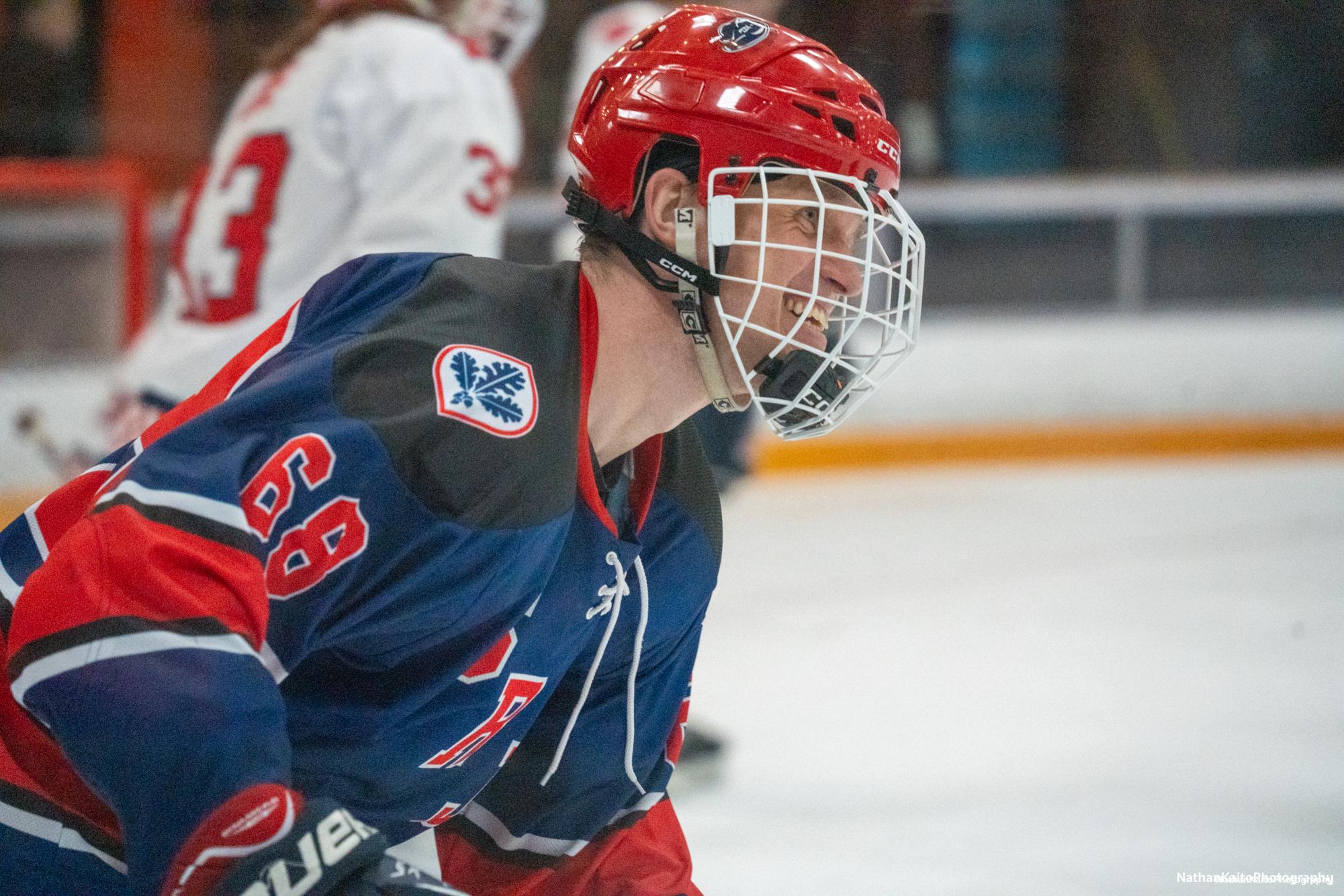
Defenseman Adam Berry, No. 68, embraces routine for its psychological benefits. Where Burns minimizes ritual, Berry uses it to stay confident and present. “I give myself a chance to win no matter the odds,” he said. “If you let negativity creep in, you’re probably doomed to fail.” Berry focuses on breathing and mindfulness, and incorporates deliberate exercises before games to manage his nerves. He arrives early to the rink, giving himself time to settle, calm down and prepare mentally.
He also carries “lucky” items. For instance, gifts from his family friend occasionally become his talisman — like the Snoopy-adorned socks he wears for a game. While he has no longstanding superstitions, these touches add comfort.
Berry is fascinated by professional athletes’ rituals, both for their absurdity and their consistency. He points to Pittsburgh Penguins player Sidney Crosby’s decades-old jockstrap as a legendary example.
“He still wears the same jock strap from when he was playing Juniors. Gross, but I think it’s been restitched,” Berry said. “Sports are repetitive. Superstitions naturally accompany repetition — shooting, skating, passing — everything becomes a pattern.”
Berry’s pregame routine also includes taping his stick from heel to toe, rubbing wax and conditioning the blade, which helps with the moisture and consistency. For home games, he switches gloves after bad periods for a mental reset. Berry’s rituals, while simple, give him a sense of control in a sport known for its inherent unpredictability.
Common threads: Music, bonding and mental prep
Despite their different approaches, Koop, Burns and Berry share a common understanding: The pregame routine is as much about psychology as mechanics.
Music gets the blood flowing and sets an emotional tone. Hydration and nutrition provide physical stability. Gear order and stick preparation create familiarity and calm. Mental exercises, like breathing and visualization, help manage nerves.
Team rituals also matter. Every game, the Polar Bears gather at the net for a final huddle. A few words from coaches and teammates remind them of their focus.