





No tinfoil required
How much do you agree with this statement?:
A financial elite, empowered by the debt-based economic system, has captured Western democracy.
Ten years ago uttering that in public may have earned you a tinfoil hat and the label of conspiracy nut. Today, whether they point to the money in politics or the impunity of the billionaire banking class, regardless of who wins our elections, many people would call it self-evident.
Following the Epstein files debacle, some would say the only question remaining is whether or not they actually eat children.
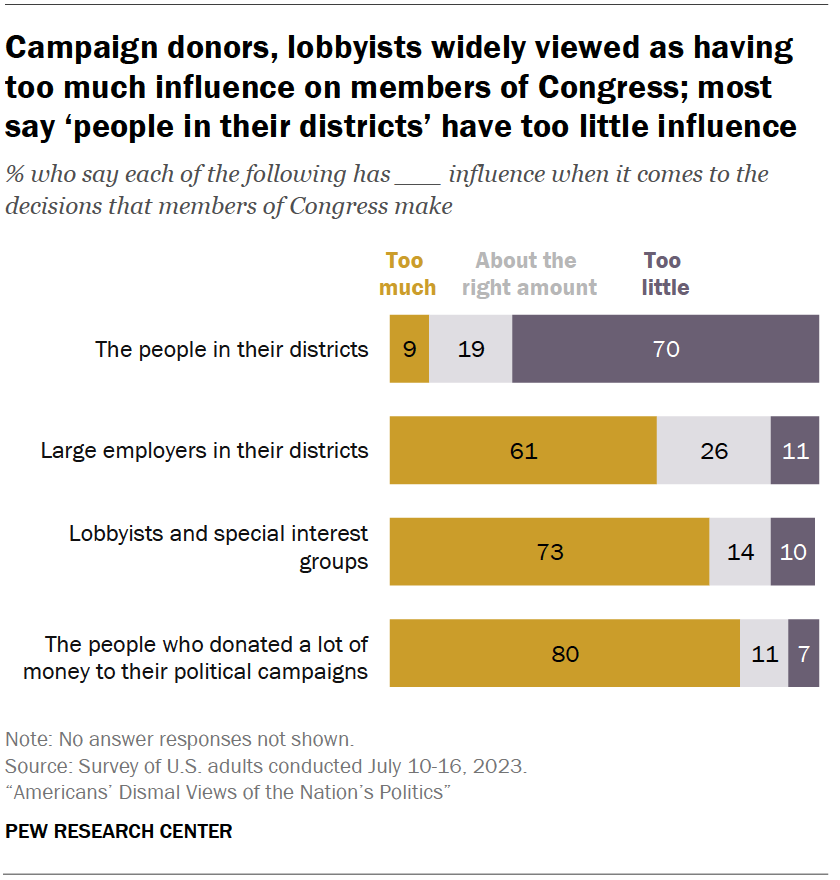
Most would at least agree that our democracies have been degraded to the point that they no longer represent the people they are supposed to serve.
Ask those same people what could be done about it and most will shrug and call change impossible. A few will say it can only come through violence.
A bleak prospect whichever way you slice it.
But what if there is another way? What if a column in a junior college paper could be the butterfly’s wingbeat that grows into a wind strong enough to change the course of mankind? It’s worth a shot. So here goes.
My name is Martyn Lees and I have a big idea. An idea so big that it has taken me half a decade to fully understand it myself, but I am finally ready to make it happen. The Fractal Harmony Initiative is my detailed plan to do so, and it all starts right here in this article — the first of a series The Oak Leaf is graciously hosting to give me an opportunity to explain it all.
In short, I believe I have designed an economic system that can reignite democracy, not through force or capture, but by exposing the current financial and media apparatus to the cleansing fire of competition in a game that can’t be rigged.
As economist Friedrich Hayek once observed, “I don’t believe we shall ever have a good money again before we take the thing out of the hands of government, that is, we can’t take it violently out of the hands of government, all we can do is by some sly roundabout way introduce something that they can’t stop.” The insight is not revolutionary, but evolutionary. Lasting change is naturally selected from parallel systems that outperform incumbents, not coerced.
Distortion of Value
In “The Road to Serfdom,” Hayek warned that centralized power structures tend to attract the worst traits in people. Even a system built with the purest intentions would eventually be captured by self-preserving interests if it depended on a single authority holding the reins; someone with less noble motives would always be waiting to seize them.
Whether a system calls itself communist or capitalist, democratic or authoritarian, if it creates opportunities for overleveraged power, those opportunities will be exploited. We see this dynamic today most clearly in central banking.
Central banking provides the financial elite with many tools of influence, but the most consequential is the ability to create money essentially from nothing. This power is obscured behind technical language like treasury bonds, fractional reserve lending and quantitative easing, but the result is the same. Money is created at scale, introduced through financial intermediaries and enters the economy already carrying an obligation in the form of interest owed. That obligation compounds upward, concentrating power while dispersing risk.
Over time, this dynamic distorts competitive markets into a corrupted form of capitalism often described as financialism, in which wealth is increasingly extracted through leverage rather than created through productivity. It is a primary driver of the extreme economic disparity and instability we see today.
An economy should be a faithful representation of the value flowing through a people. Yet by many estimates, the scale of global financial assets and derivatives now dwarfs the real economy of goods and services by an order of magnitude. What grows in this gap is not productivity, but abstraction. By allowing this, we not only hand the financial elite the ability to generate their own wealth from nothing, but we also allow them to define value itself.
This matters because, at its base, value is a measurement of meaning. When money creation becomes detached from production, the value it carries into the economy is meaningless. Obligations multiply faster than real value can ground them, and pressure builds to convert abstraction into something tangible. Meaning itself becomes unstable as the economy demands that meaningless value be made real. The only way to do that is to convince society that meaningless things are valuable, and so society finds itself in the grip of mindless consumerism.
Captured Democracy
Advertising emerged as one of the primary mechanisms for persuading society of just that. Advertising has influenced media ever since James Gordon Bennett Sr. realized its earning potential far outstripped that of merely selling newspapers in the 1830s.
In the 20th century, advertising really found its stride with figures like Edward Bernays, the godfather of public relations, who coined the phrase “the engineering of consent.” His crowning achievement came in the 1920s when he successfully undid the social taboo around women smoking cigarettes by hiring models to march in the New York Easter parade while lighting up. Bernays told the press they were suffragettes smoking “torches of freedom.” Tobacco companies doubled their market and millions more cancer patients were created.
Modern advertising manufactures desire, reshapes identity and, since it is the driver of almost all media, determines the worldview of the majority of people, all of it directed by the stream of corrupt incentives with its fountainhead at the financial elite. Media is our window on the world past our direct experience, and advertising is only one way in which financiers determine what is allowed to come into view.
In recent decades, ruthless hedge fund managers like Randall Smith of Alden Capital have sought out local newspapers that floundered in the advent of digital media, buying them cheap and liquidating their assets before they had a chance to adapt. Pillars of America’s journalistic heritage, like the Denver Post and the Baltimore Sun, were, as the title of documentarian Rick Goldsmith’s film puts it, “Stripped for Parts.” Those that aren’t immediately butchered are muzzled so that only stories approved by their new owners see ink.
News, culture and even food production are all filtered through systems designed to service leveraged financial claims first, human meaning second. Since elections amount to little more than competing advertisement campaigns and candidates depend on the same media apparatus to reach voters, the democratic process is entirely subject to the same incentives. This corruption is further compounded by the same financial interests donating the majority of the money spent on distributing those campaign ads.
Reforming these institutions from within is unlikely to be enough. If power concentrates wherever systems allow it, then the only real question left is whether we can design systems that do not. In the next article we will begin our exploration of the answer.

PG • May 11, 2026 at 5:55 am
Hi Marty – this was an interesting read. Something back from the past. The ‘new age philosophy’ movement was all for setting the world on the right course by reflection and seeing the human condition as essentially being set to a ruinous course by thinking in terms of ‘vectors’ in a purist form. Would be happy to see more coming.
Sean • Mar 11, 2026 at 10:05 am
Interesting article…very ambiguous headline though, wasn’t sure what I was getting into