




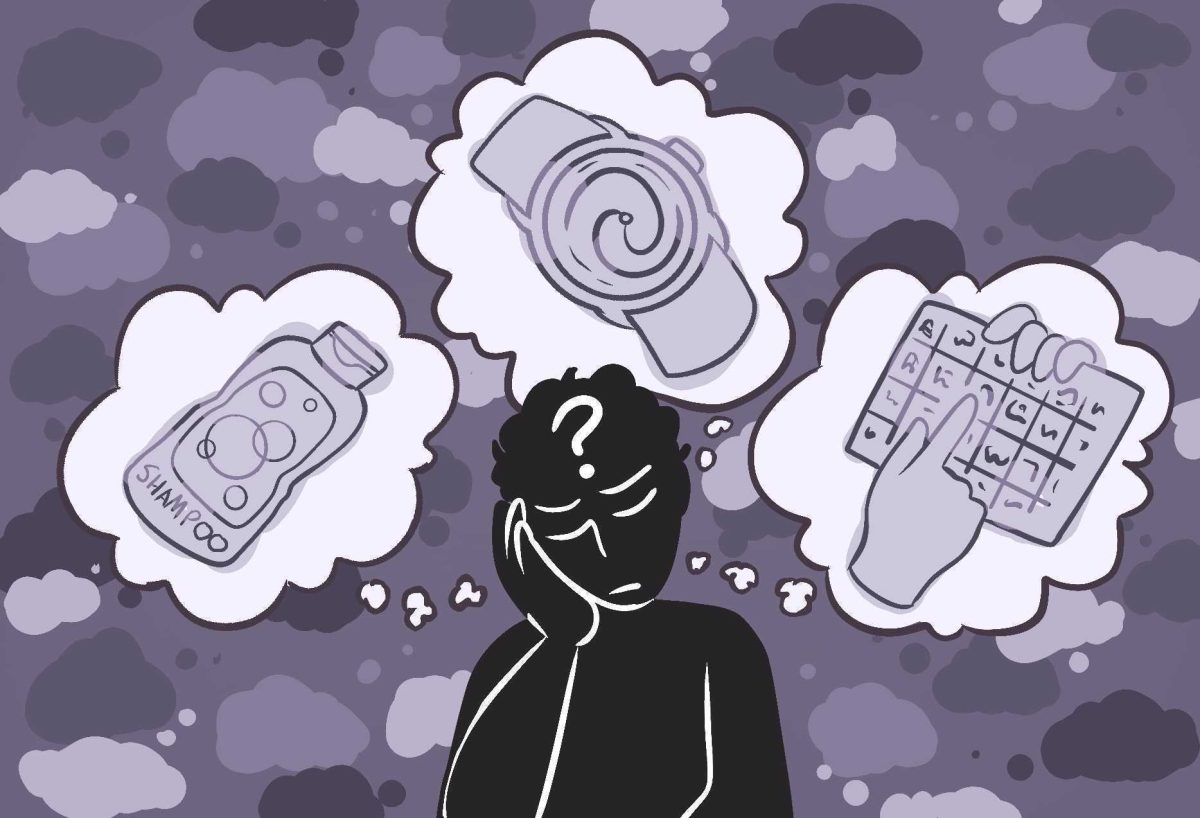
Having a disability requires a level of need inherent in the word. No life lives in the stories I tell myself about being disabled. Am I unworthy if I might need government assistance instead of working full-time to support myself? I worry about my future, wondering if I will be alone or have a partner. I long for independence but feel thwarted in my attempts. I want to live away from my parents in my own place, yet I know I’ll need help.
Years of leaning on others not only make me question my capability but also plant the wild seeds of resentment. The feelings are contradictory. I know I need help — and have a deep appreciation for my support systems — yet I hate being reminded that I need them. Help with basic living skills — such as cooking, shaving and noticing when my shampoo bottle is empty — may seem trivial to others, but it is my everyday reality.
My autism presents as a sensory-motor disability. Sensory awareness befuddles me, altering how I perceive you, the world and myself. For instance, time is a strange construct for me. Real life in real time — moments present, minutes gone — it’s all a blur in my mind. Time evaporates like rain on a sidewalk after the sun comes out. It fails, miserably, to be tangible. Yes, I can tell time, but I often forget its relevance, simply because I wander in sensation. I need a support person to keep me on track with my schedule.
For me to communicate effectively, I rely on help from a communication partner. I need this trained individual to maintain my focus so I can point to letters, spelling out my thoughts carefully one letter at a time on a keyboard. Without this specialized aide, I am left to navigate the world of talking people without a way to interact, and I feel like a rudderless ship. Given my limited and unreliable speech, this is problematic. In time, my skills have grown, and it’s not impossible to imagine that someday I’ll type independently. This will likely take years of dedicated practice. Simply put, communication may always be easier for me with help.
My biggest obstacle to living independently is not having alone time because of my need for communication support. I need solitude to quiet my strange propensity to ruminate on the negative. I can also feel people’s emotions and often sense their thoughts. Can you imagine the hippie, mishmash soup that my neurons must disentangle to think a coherent thought? When I am alone, I become one with the Earth around me. I feel the trees rooted deep, and my body sinks into that. My mind follows suit, and I tease out the instrumental threads of myself.
Independence, perhaps, isn’t deserving of the high praise it often receives. Sure, being self-reliant has its benefits, but being able to rely on others also holds great value. Embracing interdependence is the way to build connections with others. We all need relationships, and that requires communication. It’s getting the right balance of independence and interdependence that creates a community where everyone thrives.
In all areas of society, interwoven connections are necessary for the world and all of its systems to function. From large-scale global supply chains to the division of household duties within a family unit, interdependence is how we survive.
“Independence seems lonely,” said Elliot Lerman, one of my communication partners. “I believe in the power of community and helping each other evolve as humans.”
I am not alone in seeking the balance between independence and interdependence. My peers in the nonspeaking community share many of the same concerns.
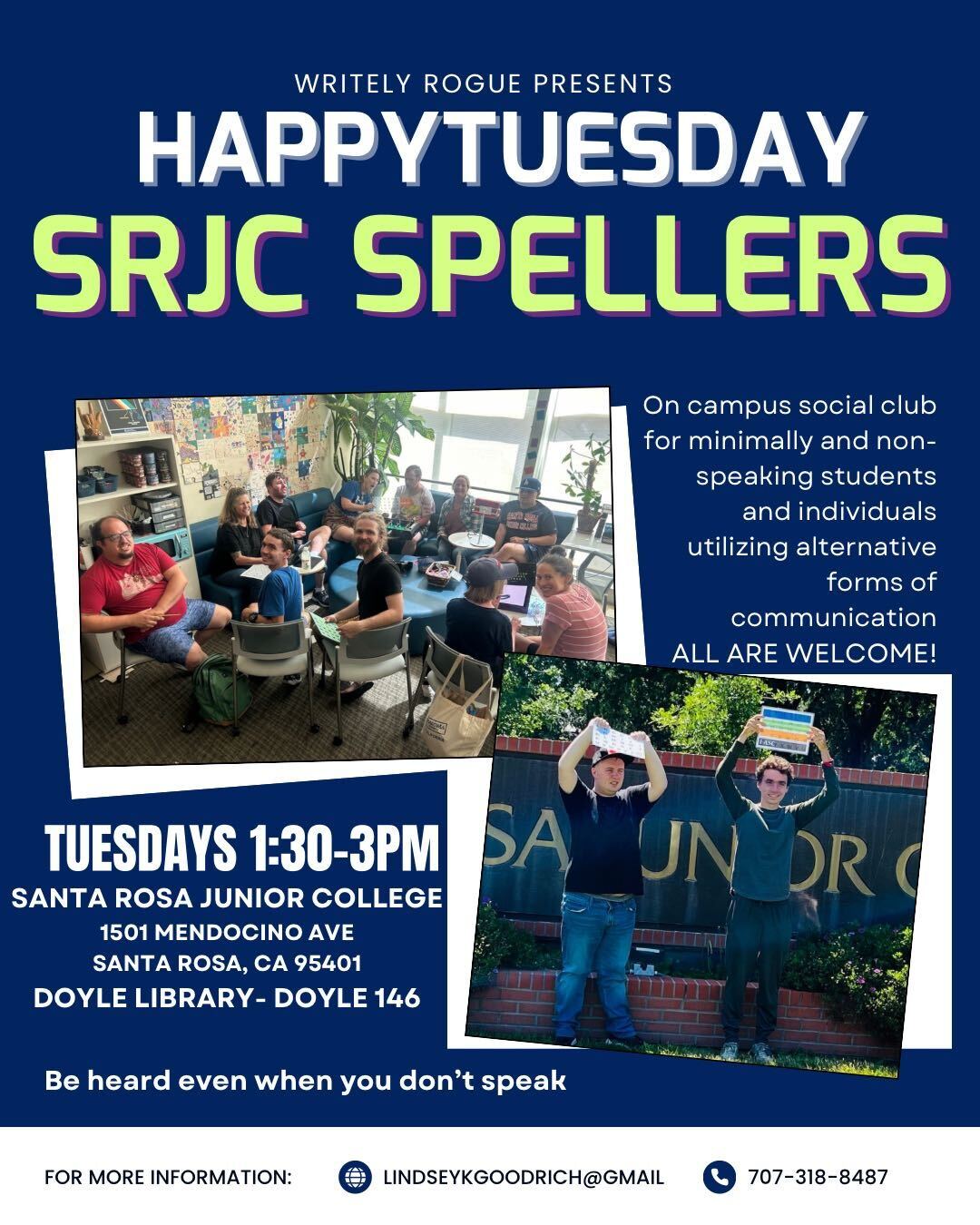
Ryan Heller, a nonspeaking autistic SRJC student who lives in a house with other disabled roommates, said, “It’s a reality [that] I need help. I am surrounded by people who respect me.”
Nonspeaking SRJC student Erin Kelly typed, “People want total self-reliance in order to accept legitimacy, but they don’t understand it’s crucial to have support,” she said. “There are skills I just know I will never acquire. I won’t drive a car or do my own shopping. Being dependent on others will be my forever.”
She said these factors do not diminish her right to find her place in the world. “Typing my thoughts allows my voice to dictate my future… I feel sad because a very big dream of mine is independence.”
Brenda Acosta, a member of SRJC’s Happy Tuesday Spellers Club, said, “People believe nonspeakers don’t reach the ability to live an independent life, but they are wrong. The biggest wall we face is our inability to speak, but as soon as our voices are heard, we are treated with dignity. We now change the limits society has placed on us.”
She added that independence is a broad term: “It can mean living on your own, making your own decisions, or just basic autonomy.”
Nonspeaking SRJC student Ruben Gillaspy believes the myth of independence for disabled people is wrong. “I think that independence is other people’s idea to hold others back,” he said. “Other people use it to not allow people to live their own lives. They want to control others. I think people should believe that they are all capable of being independent.”
Instead of disability, what if society thought more about capability? I may always rely on others for basic necessities to live the way I want. The goal of independence insinuates a list that no longer suits me. In the hope of someday gaining respect for the process, I think I’ll try to appreciate the agency I do have, such as making decisions, choosing my friends and selecting my classes and activities.
Disabled people are bombarded with messages to increase independence in a way that can lead to a mental logjam about what to accept and what to strive for. I’m comfortable with the life and routines I’ve had with my parents, yet I long for the experience of living in a completely new situation separate from my family. I feel excited, yet also terrified.
The myth of independence can lead to a lack of autonomy for disabled people. Dependency for basic living needs does not prevent self-governance. Lack of communication threatens my autonomy. When my nonspeaking voice is heard, I am living as my most authentic self.
Perhaps Kelly said it best with the words, “Yes, our dreams haven’t been noticed but the loud-ass things everyone says we can’t do and the doubt they have for disabled people sucks.”
Editors note: a hyperlink to a video by SRJC’s Happy Tuesday Spellers Club was removed from the body of this article. Monday, June 29, 2026.


Lilly McGrath • Apr 15, 2026 at 7:23 pm
A wonderful and well-written article, my dear cousin Noah!❤️ I really loved this piece. It made me think about how often independence is treated as the ultimate goal. In reality no one is truly independent! We are ALL relying on systems, people, and community— often times, in ways we don’t always acknowledge. The way you described that push and pull between needing support and wanting autonomy was especially powerful!
Carol DuBay • Apr 7, 2026 at 1:40 pm
Noah’s article helps me to understand what nonverbal communicators are going through- what a beautiful article. Also, love the quotes from all the different people . Erin’s quote at the end really sums up how frustrating it must be to be misunderstood as a nonverbal communicator😔
Jeannie Kelly • Apr 1, 2026 at 4:15 pm
Thank you for sharing your words and thoughts Noah! I love this article so much and one of my favorite lines is “It’s getting the right balance of independence and interdependence that creates a community where everyone thrives”.