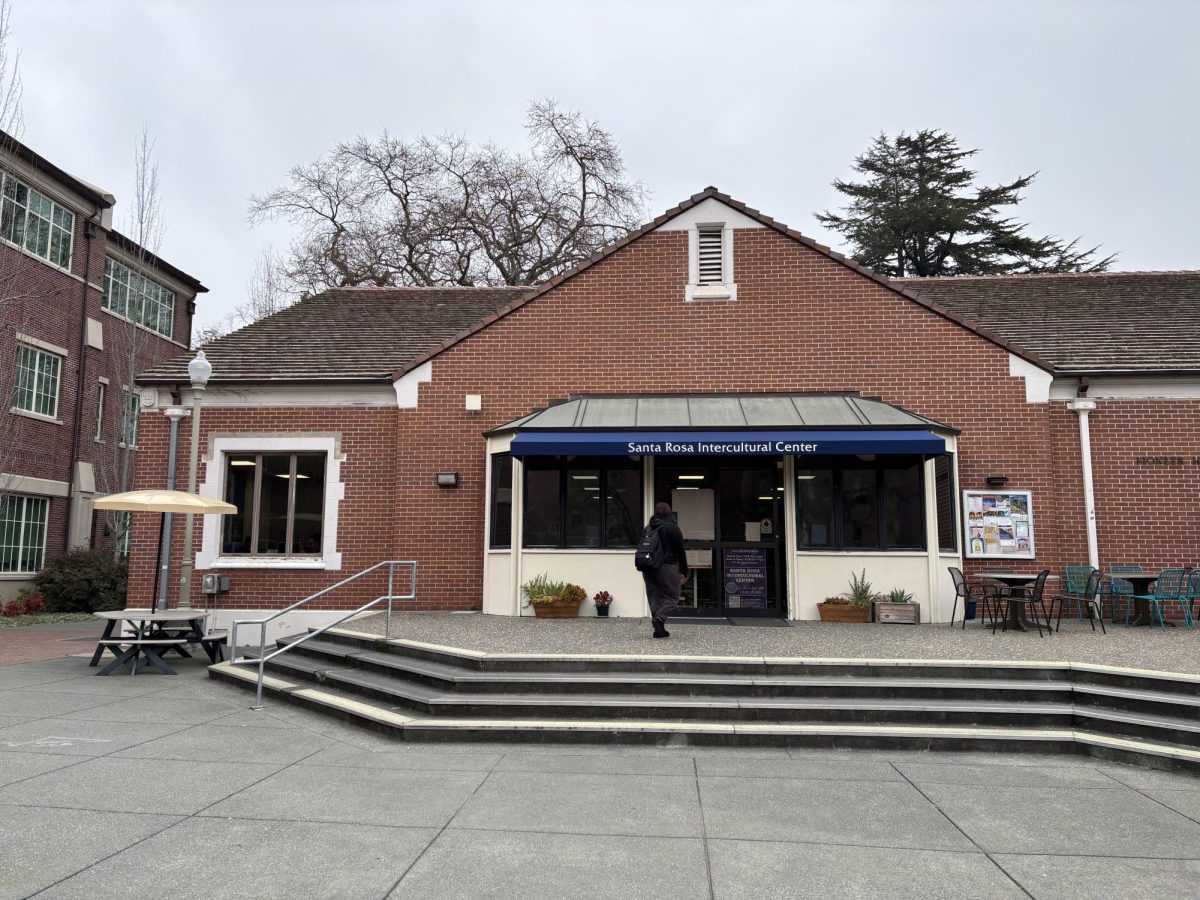
A joyful resistance against transphobia and uplifting of transgender identity full of art, stories and dancing took place for International Transgender Day of Visibility on April 1 in the Bertolini Student Center at Santa Rosa Junior College’s Santa Rosa campus.
Bree Clark, the coordinator for the SRJC Queer Resource Center and facilitator of the event considered this gathering very important in our current political climate around trans identity.
“I think it’s a good reminder that joy is an important piece of resistance, whereas in most places right now, trans as an identity is under attack,” Clark said. “So it was very important that we got together and showed that our folks’ voices are important; especially the trans community, who need to be heard, and especially joyfully, need to be heard and have a break from the world.”
The Trump administration has enacted laws and lawsuits that are accused of targeting trans people, with one lawsuit coming to SRJC itself with accused Title IX violations from a trans athlete. This is far from the only action taken against trans individuals in the US, with strict legal definitions of sex being forced upon people, namely: The Kansas law that revoked driver licenses for anyone identifying with a different gender than they were born as. Additionally, the Supreme Court made a decision Tuesday, March 31, protecting the legal right to perform conversion therapy in Colorado. The Heritage Foundation has also notably made attempts to have a “transgender ideology inspired violent extremism” category in the FBI.
Clark grew up in a mixed ethnicity religious family. Their first identity struggle was with their racial identity and coming to terms with it. It wasn’t until they left home that they began exploring their queer identity at SRJC through literature and classes, especially finding English classes helpful for not just focusing on cisgender white men.
Finding identity and embracing it was a main focus of the event, with papers to draw and paint drag-personas; and Trixie Mattel-themed coloring pages; and stories of how people came to find their identities led by LGBTQ Connections members.
Sam, 20, a liberal studies major at SRJC who attended, felt safe and uplifted at the event. He felt this event was important because of the current political climate.
“I feel like because of all of the negativity happening right now, it’s hard for trans voices to be heard,” Sam said. “Including my own.”
Soul, the director of LGBTQ Connections, felt this day was a very important day of resistance and celebration of trans joy.
“Trans day of visibility is a day of celebration, I think that it’s important to do that, because a lot of times those moments kind of get lost in our modern day society, but it’s inherent to who we are as people, as ancient people too,” Soul said. “We need celebration and we need ceremony and we need connection and we need community.”
Soul also identified the connections between the governmental oppression of their people the Apaches and the oppression of trans people today, along with the resilience it takes to resist.
“My family is Apache, so this isn’t the first time we’ve seen something like this happen where government comes in and says, ‘You are wrong to be here’ and try to eradicate those things, but as we’re still here, it takes love, perseverance, commitment, joy and identity. Those things will stay,” Soul said. “So it’s really important to have this celebration, come out and be present.”
Elliot, a program coordinator for LGBTQ Connections, believed in the heavy importance of trans joy, especially when media tends to be focused on the negatives.
“I think it’s really important to acknowledge our struggles, our resistance, our joy, and that’s kind of the focus of this event,” Elliot said. “We wanted to focus on the joy and create more capacity for that, because we’re already experiencing a lot of struggles.”