




When global superstar Bad Bunny took the stage at Super Bowl LX’s halftime show on Feb. 7, the performance drew an average of 128 million viewers nationwide — including students at Santa Rosa Junior College.
The Super Bowl remains one of the most-watched annual events in the United States, and the halftime show often carries as much anticipation as the game itself.
This year, the NFL selected legendary Puerto Rican artist Bad Bunny, who averages more than 110 million monthly listeners on Spotify and has become a defining voice in global Latin music.
His performance blended high-energy production with pointed cultural references and an overarching message of unity.
“I loved the message,” said SRJC student Kassandra Mira. “I think during the times we are in, people forget that we still live on one planet. We are a big global community, so it was touching to see that a star is using their platform to spread such a positive message.”
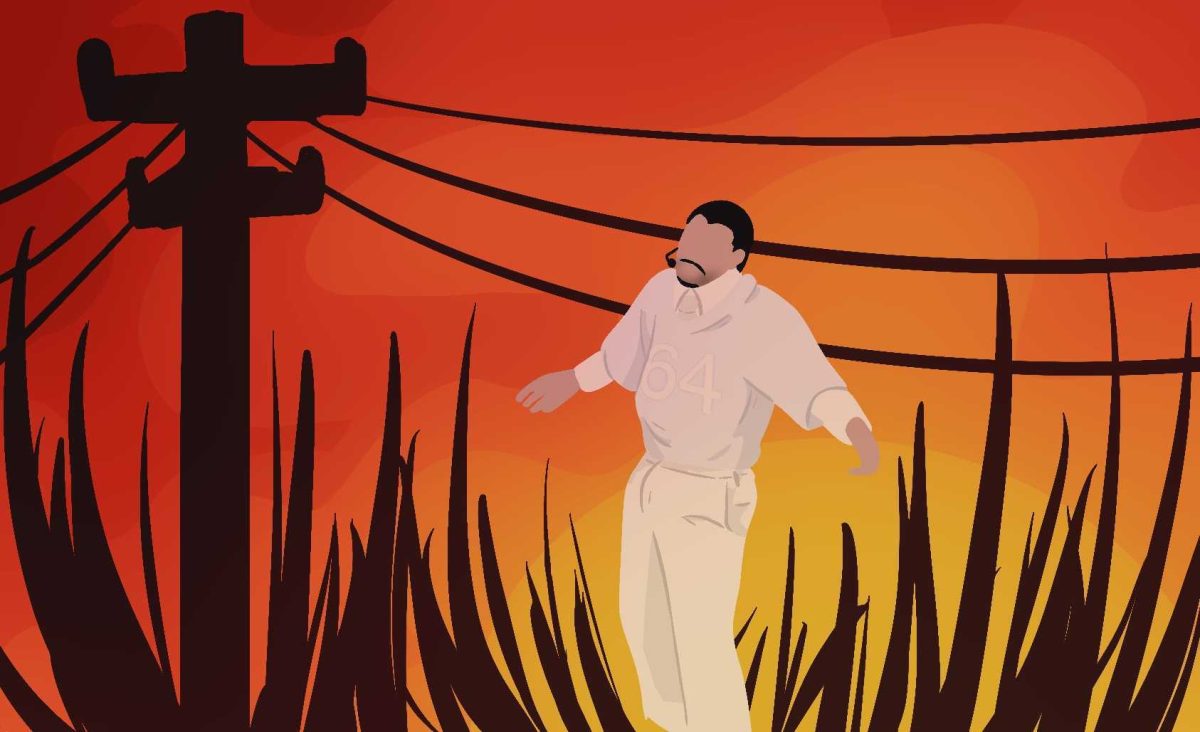
One of the show’s most talked-about segments referenced Puerto Rico’s ongoing power grid instability. During the performance, power lines flickered and actors appeared to be electrocuted — a symbolic nod to the island’s repeated blackouts and infrastructure struggles.
“Something I was a little confused at first was the power line act where the actors got ‘electrocuted,’” Mira said. “But later I found out it was a serious problem in Puerto Rico. Many died because of the constant loss of power. I thought it was a way for him to shed light on this problem.”
Despite controversy surrounding his selection — largely because much of his music is performed in Spanish — many students said the performance still resonated.
Fans described the performance as immersive and rhythm-driven, arguing that Bad Bunny’s performance style transcends lyrics.
The show concluded with a powerful moment in which Bad Bunny listed countries across North and South America, emphasizing that “America” extends beyond the United States.
“It was great to be reminded of that in an amazing performance,” SRJC student Natalie Emanuele said. “When we talk about America, that is also America.”
SRJC student Alexis Lee echoed that sentiment.
“I believe that it is a great reminder that America is made up of both the continents instead of just the USA,” Lee said. “I really liked how he shouted out all the countries that make it up because it is important to realize that not just one country is necessarily more superior to another.”
Beyond the halftime show, students also reflected on the Bay Area’s visibility during the nationally televised event. Major sporting moments often place the region in the spotlight, offering what some see as an opportunity to reshape public perception.
In recent years, San Francisco has faced criticism regarding crime, homelessness and economic shifts. However, some national figures have publicly praised the city’s culture and energy.
Sports personality and podcast host Pat McAfee echoed that shift in tone during a recent episode of his show, where he spoke with Mayor Daniel Lurie. McAfee said he was pleasantly surprised by the city’s energy and scenic views, noting the number of people walking and running throughout public spaces.
For SRJC students, hearing that kind of praise reinforced local pride.
“Whenever there’s an event in the Bay, I want people to see how much more superior the Bay is than SoCal,” SRJC student Evan Pesqueda said. “We aren’t just a city — we’re a mixture of cultures from all over the world and the tech capital of the world with all of our advanced technology.”
While reactions to the game itself were mixed — particularly given the 49ers’ rivalry with one of the teams — students said the combination of sport, culture and representation made the night memorable.
For many at SRJC, Super Bowl LX was about more than a final score. It was a reminder of shared culture, global identity and the pride of seeing both heritage and hometown represented on one of the biggest stages in the world.

